Showing posts with label Restoration Work. Show all posts

Thursday, July 20, 2017

Thursday, July 20th - Day Out In Christchurch

Sadly, we have only a few days left.  Our five week journey seems to have gone by so quickly. We started our day with student’s choice - a morning out in Christchurch where the students had time to sightsee, shop, and/or do journal work.

We spent the afternoon and evening at Willowbank.  Willowbank is a wildlife reserve where we had a chance to see up close both exotic animals that settlers brought and cause problems here in New Zealand (everything from deer to rabbits to wallaby, etc), as well as native animals which the reserve is trying to rehab, educate the public about, or help with repopulation efforts (kiwi, kaka, etc). In addition, we had a Ko Tane or Maori experience where the “gals” got to try Poi Balls  and the “guys” got to try a haka Kapai! Afterwards, we gathered in the restaurant to have a hangi  which is food smoked in the ground. Very tasty!


Cheers, Dr. H and Meryl

Since the time of early settlers, exotics have posed problems for New Zealand. 
Adorable, but a pest. 
Colin with Kea 
Ko Tane performance
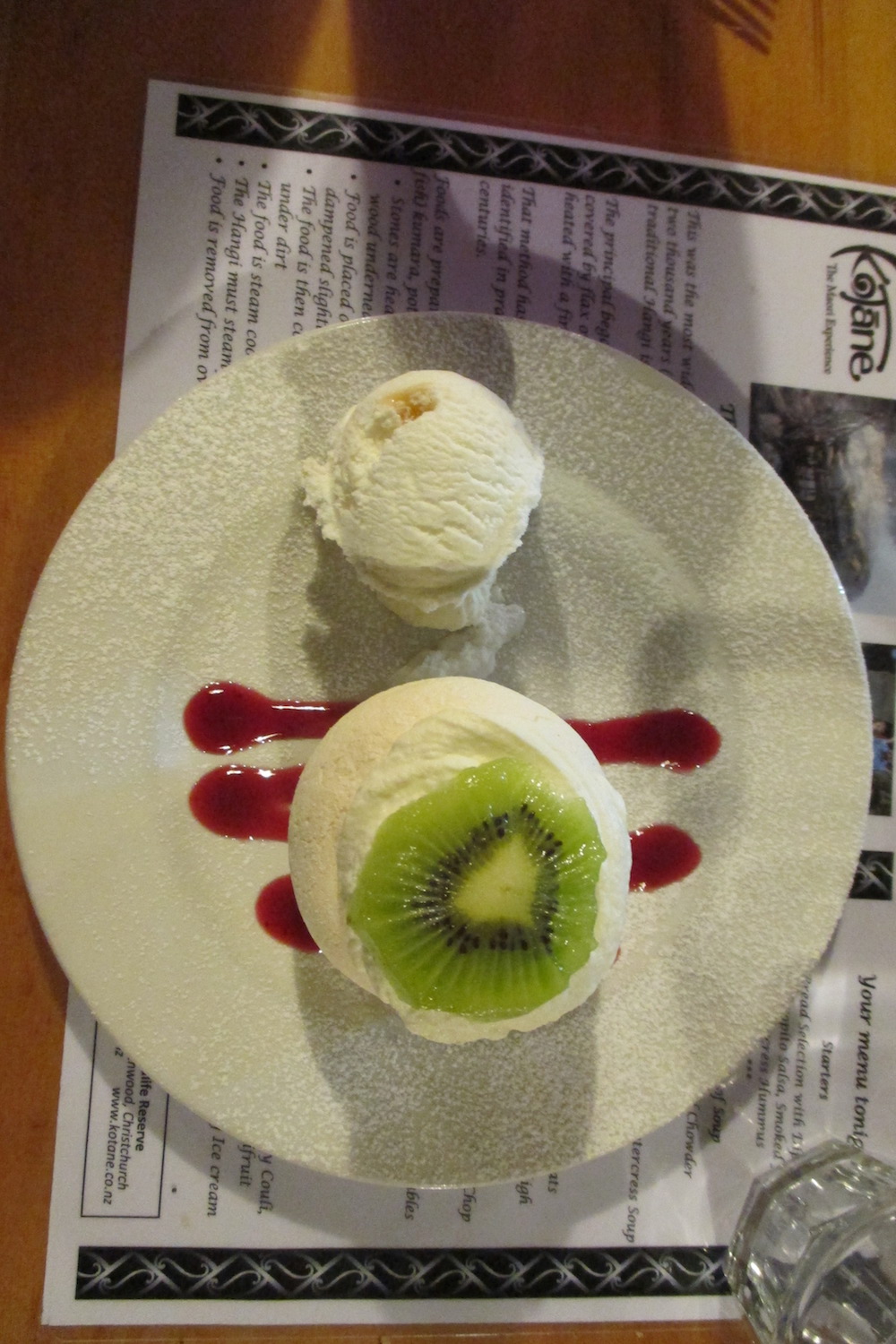
Pavlova and Hokey Pokey for dessert : )

Wednesday, July 19, 2017

Sheep Shearing and Sweet Secretions

In the morning we left the Waipara Sleeper Cars and headed to Springfield to meet with Trevor and Heather, whose property is part of the green dot program. The farm is located in an area known as Kowai Bush, which means "between the waters" in Maori due to the fact that they're located between the Kowai river and the Waimakariri River.

Once there, Trevor gave us a brief overview of how they came to be a part of the green dot program and what kind of work they do on the farm. After hearing about the subsidies being offered by the Selwyn District Council for people to plant or regenerate native bush, they had an ecological survey done on their land to identify the native species growing there. A surprising 50 species of native bush were identified, so they applied for the funding and were granted money to install fencing, buy more plants, and provide labor for the plantings. The first block was planted about six years ago and they've been able to create two more blocks through money saved by installing their own fencing, getting a local Lions club to help plant the plants, and increasing the space between plants in each block (to spread them out). The plants they buy are from the Department of Conservation nursery because they use locally sourced seeds instead of seed imported from other parts of the country. Trevor estimated 6,000 plants have been planted on the 61 hectare property—an impressive figure, I'd say. The farm is primarily used for raising sheep for wool and meat production, however Trevor and Heather also give farm tours throughout the week.

After their talk, we got into our first task of the day—trailblazing. We tramped through the first block with loppers and chainsaws a blazin', clearing out any overgrowth on the trails. Then, some of us were tasked with removing leftover CombiGuards from the plants in one of the blocks. We took a short walk through part of the property to identify some plants (such as black beech, silver beech, red beech, and golden akeake) before taking a lunch break.

Our next task was planting 50 silver tussocks in another block on the property. Through some efficient displays of teamwork, we quickly got that job done and went back to the paddocks to watch Trevor gave a sheep herding demonstration with his dog Jack. The real treat came when we gathered in the main building to hear more about wool. Trevor explained a bit about the type of sheep he raises (Romney Texel) and what the wool is used for (carpets, mainly) and then he pulled out a live sheep for an up close and personal shearing experience.

We took a quick walk to the Waimakariri river to try out our stone skipping skills before saying our goodbyes to Trevor and company. Not far down the road, we stopped at Lords Bush to have a taste of honeydew, a secretion made by scale insects on the bark of beech trees. The honeydew is eaten by nectarivorous birds (and us) and creates sooty mold on tree bark.

Our last stop of the day was near Lincoln to check out Graham and Karen Rogers's sustainable kiwi home. Graham works at Landcare Research in addition to owning 4.5 hectares of stone fruit orchards. The couple has several solar panels installed that are plugged into the main power grid and provide their home with most of the energy it needs. Graham talked a lot about how the solar panels work, how wind turbines work, how batteries work—we basically were in a live episode of "How It's Made". After a full day of learning and fun, we finally headed back to Lincoln to get ready for tomorrow's adventure!

Trevor telling us about the restoration project on the farm


Marta blazing that trail


Sheep herding


A live sheep shearing demo


Trevor and Heather's grandsons teaching us a new haka


Skipping stones on the water


Tatiana trying the honeydew


-Isabella

Sunday, July 16, 2017

July 16 - All that Quail Island but not one quail

Today we left at 8am to catch the ferry from Lyttelton Harbor to Quail Island. On the way to Lyttelton, we pass through a tunnel.  A very long tunnel. Isabella (twice - once each direction) held her breath through the entire tunnel - for 2 minutes and 28 seconds the first time (and way too long the second time).
The windy start to the day was met with some intense spectating on the short boat ride to potentially spot a Hector’s Dolphin (unfortunately no one did). Once we arrived on Quail Island we meet more formally with Quail Island Conservation Trust Chair, Ian McLennan, who gave us a brief history of the island and the work being done there, as well as the volunteers who come out twice monthly. 
The Quail Island Conservation Trust partners with the New Zealand Department of Conservation to manage the 85 hectare land by trapping invasive species of various mustelids, cats, and rodents, as well as planting native trees and grasses to attract native fauna back to the island; as of now, the trust has planted up to 90,000 trees! The island itself has been in use since 1850 when early settlers came in for farming, and then was used as a quarantine station in the 1870’s and eventually became a leper colony in the early 1900’s. In 1975, Quail Island became a recreation reserve that is now safe to the public and is a favorite summer destination for kiwis since the beaches are sheltered from the wind. The Monterrey Pine and Monterrey Cypress act as a shelter belt and remain in a few places on the island for historic reasons, while the native plants like Karamu, or Coprosma robusta, attract native birds like silvereye, bellbird, and the wood pigeon. The planting program that the trust follows is to help the forest spread since the non-native pasture grasses present on the island will not allow for it.
            Our role in helping the trust was in potting 338 starter plants of Silver Tussock. We used an assembly line system to keep the process moving. The process was messy and entertaining at the same time. After some growing, in about a year, our work will be able to finally be transferred to a more permanent home in the ground! After our morning nursery work, we had lunch and went on a hike around the island to reinforce our native NZ plant identifying skills, and look for the Canterbury Gecko. As we walked we got to see views of places we have been around the Port Hills the past few weeks. The hike was around 4.5 km, and we finished by walking along the beach near the site of the dog kennels once used to train dogs for Antarctic expeditions. We left on the ferry after that, and finished the day with a nice tea time at Dr. Hostetler’s favorite place in Lyttelton – Coffee Culture.


Quail Island directory


No one can stop the machine


*Restoration intensifies*


Family picture with our new Silver Tussock babies


Quail Island has some pretty interesting cliff sides - this one was once climbed by Maori boys as a coming of age test to get eggs from the nesting birds


By next year our 338 starter plants will be in Combi-Guards like these shown here - they protect the native plants in them from weeds, wind, and browsing mammals

Canterbury Gecko


One of the many trade ships that became a victim of Quail Island shores… "get shipwrekt"


Tupelo and Isabella, "mud sisters", walking out into the cold mud at the beach at low tide


-Camila